



Fermin Piccolo
Co-founder, Arqueum
Published on · 6 min read

In an increasingly dynamic corporate environment, information is power – as long as it is easily accessible and reliable. Many companies, however, are still living in the “before”: teams spend excessive time searching for documents, dealing with manual processes, and putting out fires in surprise audits. Have you ever wondered how much of that time could be better spent on strategic activities that would generate more value?
This article invites analysts and leaders in quality, compliance, and governance to reflect on their teams’ current scenario and to imagine (and achieve) the “after”: a future of optimized processes, assured compliance, and decisions based on reliable data drawn from the right information and documents, one click (or one prompt) away.
Setting the context - The before
Let’s face reality: what does your team’s scenario look like today?
In midsize and large companies, it is common to find inefficient, decentralized document processes, and in this context, research reveals worrying symptoms of this “before” scenario of digital transformation:
-
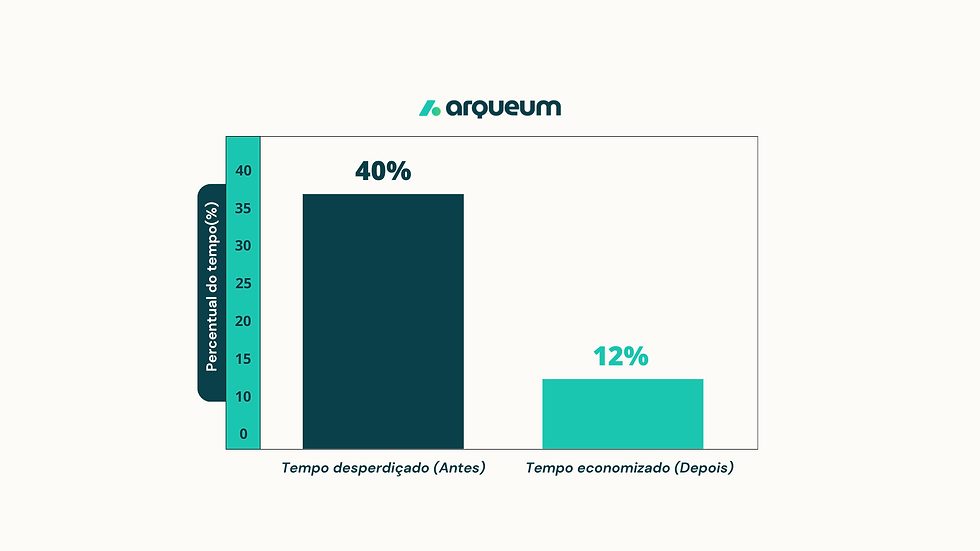
Wasted time: professionals lose valuable hours searching for information. A study compiled by AIIM shows that, according to a McKinsey report, employees spend an average of 1.8 hours per day – the equivalent of almost 20% of the workweek – searching for and gathering information. Another survey cited by AIIM indicates that 19.8% of business time is wasted on searches for information. And, according to IDC, knowledge workers spend about 2.5 hours a day (approximately 30% of the workday) looking for the data they need. To top it off, an analysis by Exame based on PwC’s 28th CEO Survey reveals that executives estimate that 40% of their teams’ time in meetings and emails does not contribute to the company’s goals. This lost time adds no value and drastically reduces team productivity.
-
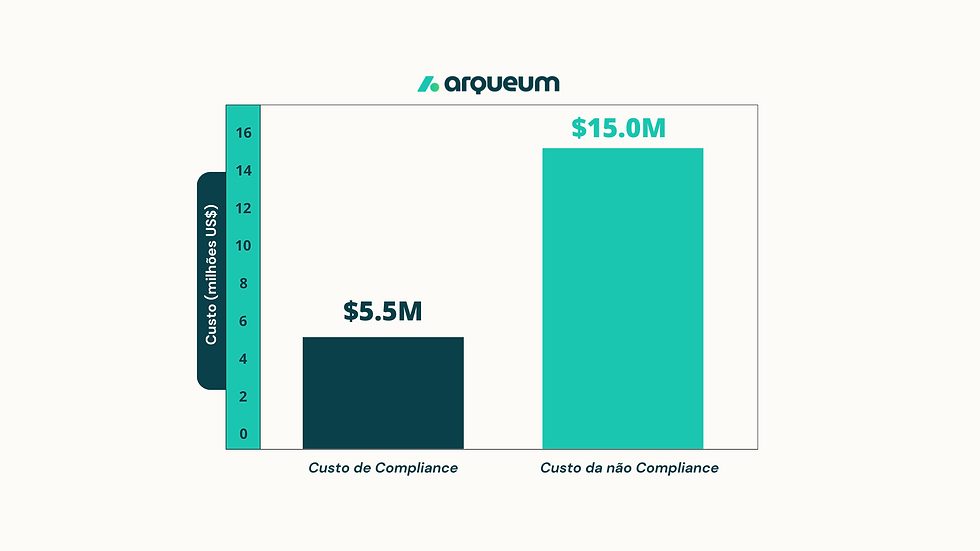
Compliance risks: keeping fragmented or incomplete records is an invitation to trouble. The Brazilian Institute of Corporate Governance (IBGC) stresses that an effective compliance system must coordinate whistleblowing channels, monitor risks, train employees, and, above all, ensure broad access to documents and information from different areas of the organization. When documentation is scattered, audits become a nightmare and regulatory sanctions become more likely. A Globalscape/Ponemon Institute report shows that the cost of non-compliance is 2.71 times higher than the cost of maintaining compliance programs; another study from 2025 indicates that companies spend around US$15 million on the consequences of non-compliance – 2.71 times more than what they invest in compliance.
-
Impaired decision-making: important information gets lost amid the documentation chaos. AIIM itself observes that 70% of its members identify the difficulty of delivering the right information to the right person, at the right time, as the main challenge of digital transformation. Data that could guide strategic decisions ends up underused or unavailable. Teams overloaded with manual organization tasks can hardly focus on analysis or innovation, impacting the business’s competitive advantage.
In short, the scenario before adopting a robust document management solution is marked by operational inefficiencies, risks, and team frustration. It is no surprise that nearly half of the CEOs surveyed by PwC say their companies may not be viable in ten years without reinventing processes and adopting emerging technologies. This figure raises a red flag for leaders: it is urgent to rethink the way we manage corporate documents and information.
The solution - The after
Fortunately, for every problem there is a solution. Now imagine the scenario after implementing a modern process and document management platform. With the right technology, your team’s reality is radically transformed. Processes that were once manual and slow become automated and traceable, giving way to a much more strategic operation. Let’s look at some of the main benefits of this new level of management:
-
Higher efficiency and productivity: repetitive tasks and endless searches give way to intelligent automation. The study The Total Economic Impact™ of Microsoft Power Automate, by Forrester, shows that companies that adopted robotic process automation (RPA) reduced the effort spent on repetitive tasks by about 200 hours per employee per year (approximately 10% of their time). When automation is combined with low-code applications, the gains reach 250 hours saved per person per year (around 12%). The same research calculates a return on investment (ROI) of 248% over three years. In other words, what used to consume hours of the team’s time is now resolved in minutes, freeing employees to dedicate themselves to higher-value activities – such as improving product quality or ensuring compliance.
-
Fast access and unified information: with all documents centralized and versioned on a single platform, your team finds what it needs in seconds, from anywhere. Intelligent search strategies, such as those discussed by AIIM, highlight the importance of identifying all information sources and storing data securely to enable fast, complete retrieval. Advanced search tools, electronic approval workflows, and complete histories ensure that every decision or change is recorded. As a result, you gain transparency and confidence in the data used by the business.
-
Assured compliance and traceability: a robust solution ensures that document retention policies and deadlines are met automatically, reducing human error. The IBGC’s guidelines emphasize that a compliance program must monitor risks, run controls and tests, and have broad access to documents for investigations. By centralizing documentation and tracking who did what, when, and why, the organization meets regulatory requirements with agility and reduces the risk of fines. And it is worth remembering: staying compliant costs far less than bearing the consequences of non-compliance.
-
Better decision-making: with the house in order, data starts working in favor of strategy. Once-scattered data turns into information and becomes a valuable asset for performance analysis, gap identification, and continuous improvement opportunities. AIIM reminds us that intelligent information management is about finding the right information at the right time; by automating processes, reports come to reflect complete, up-to-date data, strengthening corporate governance. Instead of putting out operational fires, leaders focus their energy on innovating and steering the company toward its long-term goals.
Likewise, comparing compliance costs with the costs of penalties highlights the importance of investing in compliance:
The transition from the before to the after in document management is not just an operational improvement – it is a paradigm shift that directly impacts the health and competitiveness of the business. Strategic leaders in midsize and large companies already recognize that eliminating internal inefficiencies is a priority. As PwC’s research emphasizes, more than half of CEOs already observe efficiency gains in how employees use their time thanks to the adoption of technologies such as artificial intelligence. At the same time, these very executives report that around 40% of their teams’ time is still lost on activities that add no value – a sign that there is much to be done.
Therefore, assessing your team’s scenario becomes indispensable. If you identified with the challenges described in the “before”, know that you are not alone – but also know that there are accessible, proven solutions to reverse this situation. The “after” shows that, with the right tools, it is possible to bring people, processes, and documents together harmoniously, creating a solid foundation for agile decisions and impeccable regulatory compliance.
Which scenario do you want your team to be in? Reflecting on this question and taking action can mean the difference between continuing to put out fires or leading your organization to a new level of performance. The improvement journey can start today – and the results will certainly speak for themselves, from day-to-day operations to the next surprise audit.